 English▼



Site Blog
Electric Car Battery Maker for EV, E-Bike & Energy Storage Packs
EV Battery Assembly Process: Complete Manufacturing Process Guide
Building Li Ion Battery Pack Complete Manufacturing Process Guide
Battery Pack Machine ICR18650 for 18650 & 21700 Cylindrical Cells
How Are EV Batteries Made: Process Flow & Turnkey Equipment Guide
contact us
- If you have questions, please contact us, all questions will be answered
- Email : David@tmaxcn.com
- Email : Davidtmaxcn@gmail.com
- Add : No. 39, Xinchang Road, Xinyang, Haicang Dist., Xiamen, Fujian, China (Mainland)
hot products
Blog
Building Li Ion Battery Pack Complete Manufacturing Process Guide
Managing yields during battery module assembly requires tight process control and reliable machinery. A single defective weld or misaligned prismatic cell can ruin an entire production batch, increasing scrap costs and delaying shipments. Setting up a dedicated line means balancing precision sorting, safe mechanical joining, and thorough validation. This guide walks through the essential stages of building li ion battery pack units, covering core hardware configurations and standard testing protocols to keep assembly yields high.
Cell Grading and Mechanical Alignment
Quality assembly begins long before welding starts. Incoming prismatic cells vary slightly in internal resistance and open circuit voltage. Sorting incoming inventory ensures that grouped cells charge and discharge evenly throughout their operational lifespan.
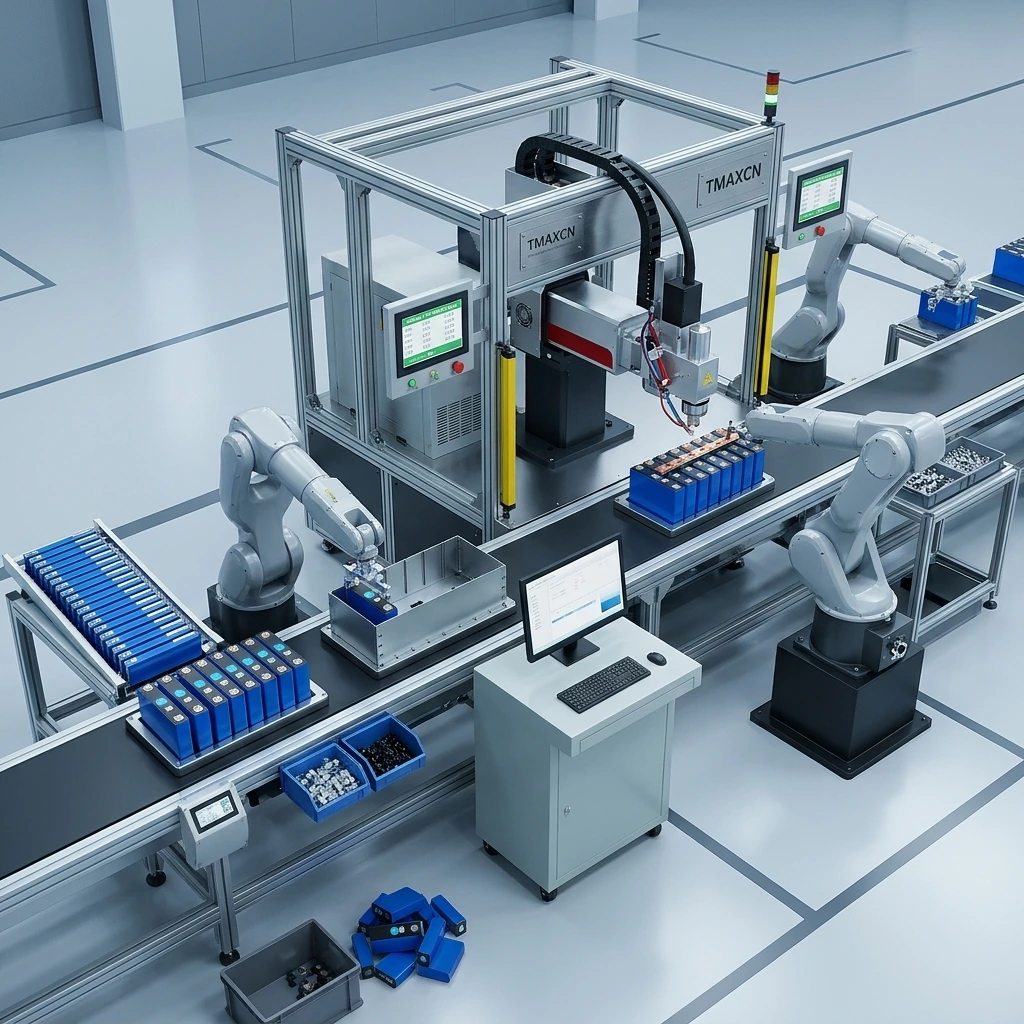
After sorting, operators place insulation barley paper on terminals to avoid short circuits. Cells are stacked in precise mechanical holders. A specialized station applies regulated physical pressure to secure the block before terminal connections. Controlled compression prevents swelling during future cycling.
Busbar Joining and BMS Integration
Stable electrical connections require clean surfaces and repeatable joinery. Laser welding provides rapid, low-heat joins between cell terminals and nickel or copper busbars, protecting internal cell chemistry from thermal degradation.
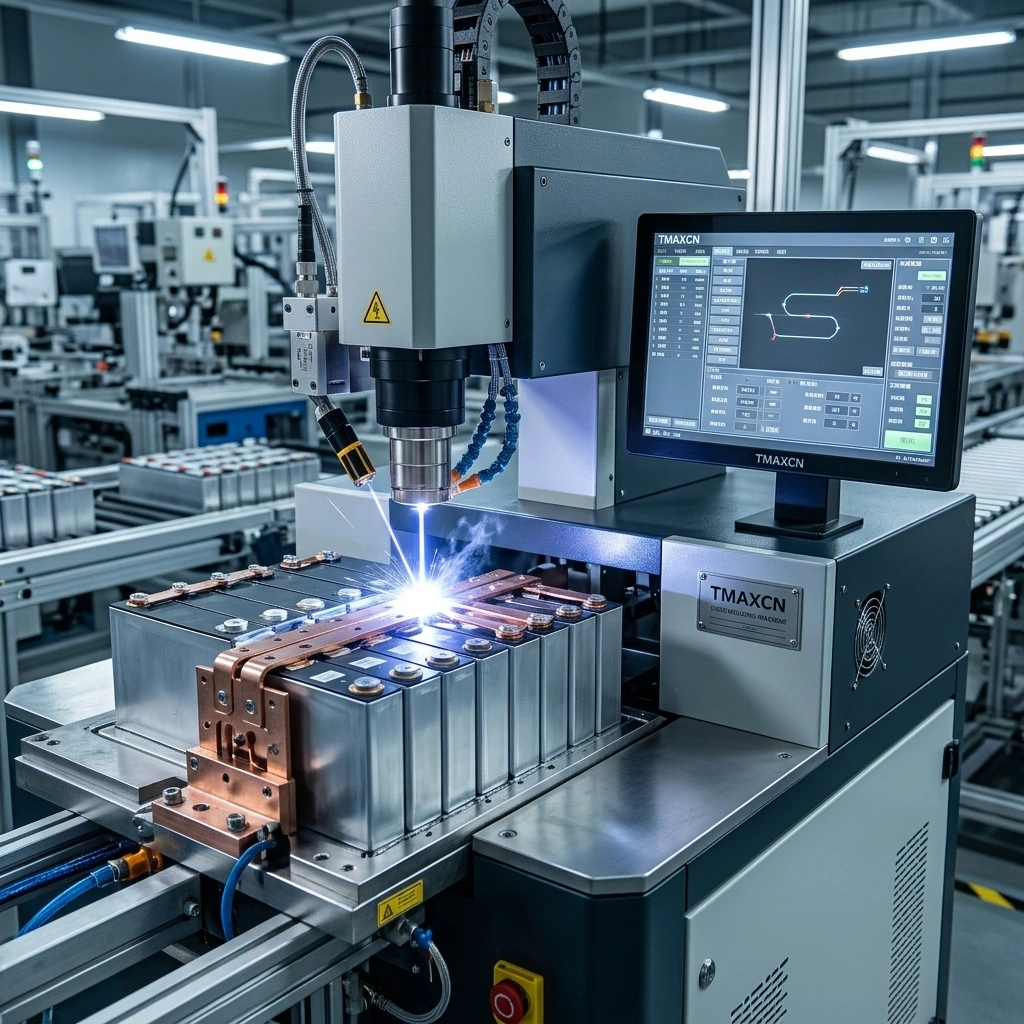
Once busbars are secure, technicians install the battery management system (BMS). Modern facilities configure a semi-automatic to guide harness routing, solder temperature sensing lines, and eliminate human wiring errors. Visual inspection cameras then check polarity and weld consistency across every joint.
End of Line Pack Testing and Burn In
Assembled modules must pass comprehensive electrical validation before final casing. Technicians run insulation resistance checks, busbar resistance tests, and communication verification on the integrated protection board.
Incoming
Cell Sorting -> Cell Stacking & Clamping -> Busbar Laser Welding -> BMS Harness Connection -> Final Functional Testing
Units then move to cycling cabinets for aging. Running complete charge and discharge profiles verifies balancing performance under realistic thermal loads. Selecting robust ensures stable data recording throughout this testing phase. Defective joints or sluggish sensors trigger alarms immediately, keeping sub-par units off the final shipment pallet.
FAQ
What machinery is essential when planning a battery pack assembly line?
A standard setup requires an automatic cell sorting machine, insulation paper sticking machine, compression fixture, laser welding unit, and comprehensive testing system. Incorporating a dedicated BMS testing station guarantees protection circuits function before pack encapsulation.
How does turnkey battery pack solution support reduce commissioning time ?
Implementing a coordinated equipment system ensures cell sorters, welders, and aging cabinets share communication protocols out of the box. Factory pre-calibration minimizes debugging on the plant floor, cutting weeks off site setup schedules.
 +86 13174506016
 David@tmaxcn.com


