 English▼



Site Blog
Electric Car Battery Maker for EV, E-Bike & Energy Storage Packs
EV Battery Assembly Process: Complete Manufacturing Process Guide
Building Li Ion Battery Pack Complete Manufacturing Process Guide
Battery Pack Machine ICR18650 for 18650 & 21700 Cylindrical Cells
How Are EV Batteries Made: Process Flow & Turnkey Equipment Guide
contact us
- If you have questions, please contact us, all questions will be answered
- Email : David@tmaxcn.com
- Email : Davidtmaxcn@gmail.com
- Add : No. 39, Xinchang Road, Xinyang, Haicang Dist., Xiamen, Fujian, China (Mainland)
hot products
Blog
EV Battery Assembly Process: Complete Manufacturing Process Guide
Building an electric vehicle pack demands strict tolerance control and repeatable cell joining. Engineers often face high scrap rates during initial commissioning because manual handling introduces micro-defects. A structured workflow ensures stable voltage consistency and mechanical safety across high-capacity modules. This guide covers core stages from sorting to final validation, helping factory managers evaluate equipment configurations and optimize cycle times for reliable manufacturing.
Cell Grading and Surface Preparation
Raw cells must match electrical profiles before mechanical grouping. Automated sorting systems test open-circuit voltage and internal resistance, grouping matching units to prevent premature pack degradation. Operators place sorted prismatic units onto entry conveyors for automated insulation. Special insulation paper protects cell casings against mechanical abrasion and dielectric breakdown during severe road vibration.
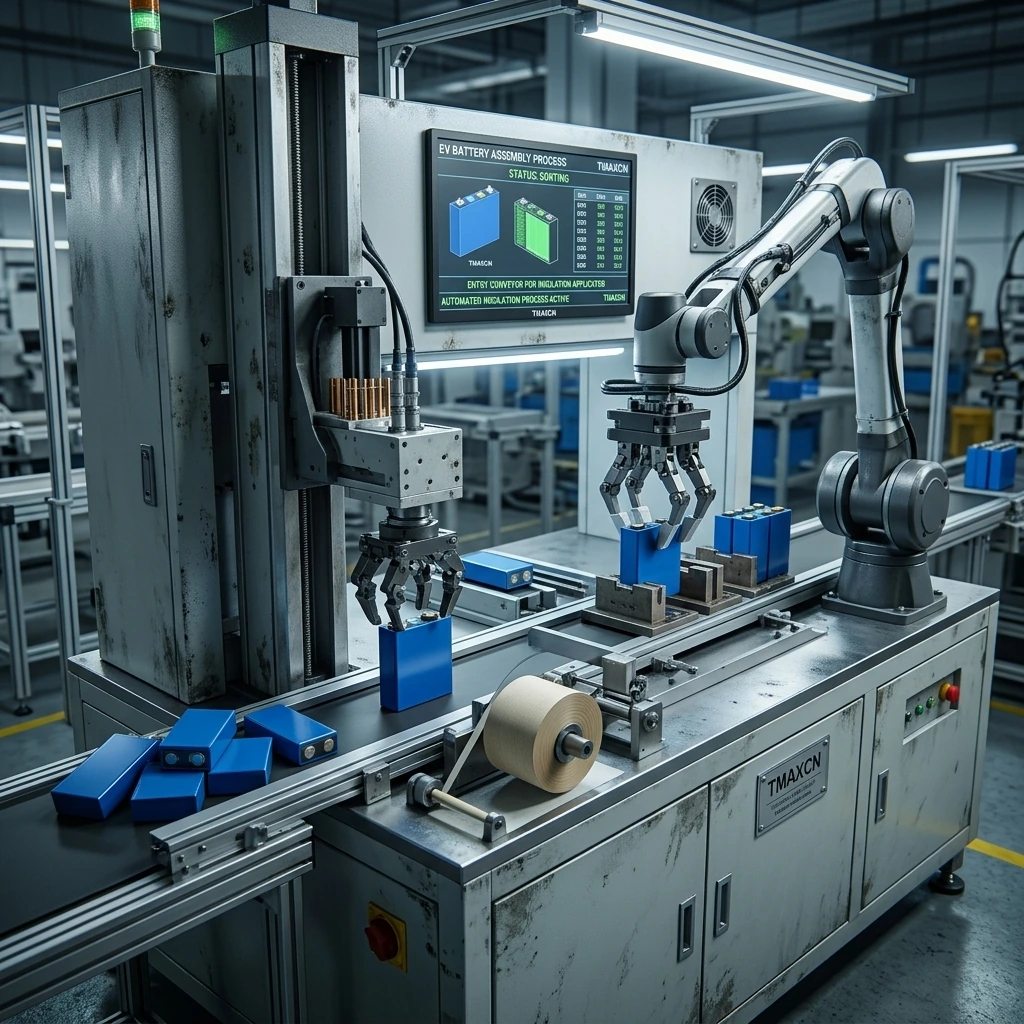
Clean surfaces guarantee low joint resistance. Fiber laser heads remove oxidation layers from aluminum terminals, preparing metal surfaces for subsequent welding. Vision cameras verify surface uniformity and reject contaminated parts automatically. Preparing surfaces properly avoids cold joints and prevents overheating under dynamic driving conditions.
Mechanical Stacking and Laser Joining
Uniform compression keeps internal cell layers aligned during charge cycles. Clamping fixtures press cells into rigid module frames before side plates are fastened. Engineers configure dedicated machinery to maintain specified torque levels during structural assembly.
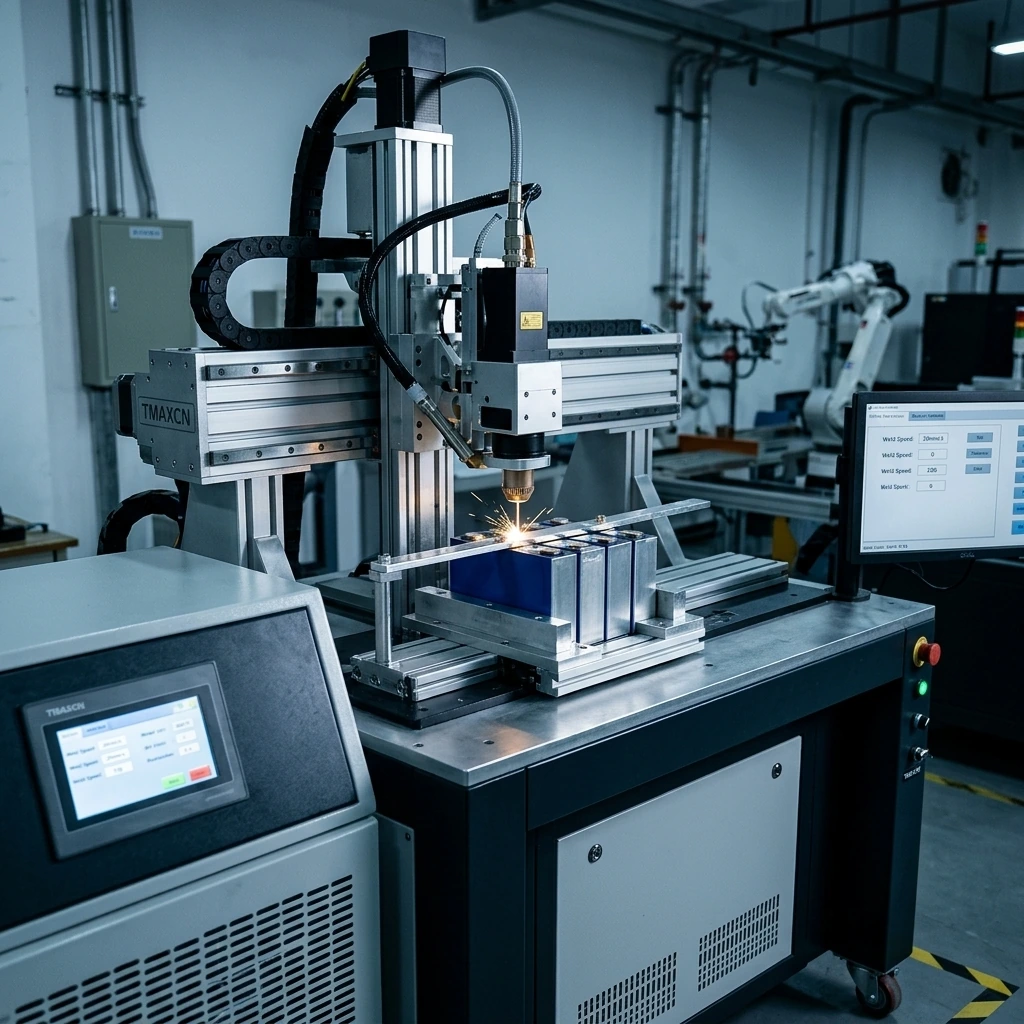
Connecting cells requires precise laser optics. Fiber laser welders join copper or aluminum busbars onto cell terminals with minimal heat transfer. Real-time seam tracking adjusts the beam focus to prevent cell puncture. Proper welding penetration keeps electrical resistance minimal, avoiding thermal hotspots when high charging currents enter the pack.
Harness Routing and Final Validation
Modules transfer into lower vehicle trays along the . Technicians install battery management wiring, temperature sensors, and high-voltage contactors. Operators position cooling plates beneath the cell blocks, applying thermal interface material to ensure smooth heat dissipation.
Automated end-of-line stations run comprehensive testing protocols on completed packs. Equipment validates insulation resistance, high-voltage interlocks, and communication bus signals. Completed units undergo controlled charge-discharge cycles on regenerative test cabinets. This cycling detects cell imbalance early, guaranteeing that only road-ready hardware ships to automotive assembly plants.
FAQ
What footprint and utility setup does lithium battery pack equipment require?
Semi-automated lines require around 150 square meters of dry production space with active humidity monitoring. Facilities need standard three-phase industrial electrical supply and dry compressed air.
How does a turnkey battery pack solution handle different prismatic cell sizes?
Configurable tooling fixtures and adjustable clamping trays accommodate various cell heights and widths. Operators update weld paths via touchscreen controls without replacing structural framing.
 +86 13174506016
 David@tmaxcn.com


