 English▼



Site Blog
Electric Car Battery Maker for EV, E-Bike & Energy Storage Packs
EV Battery Assembly Process: Complete Manufacturing Process Guide
Building Li Ion Battery Pack Complete Manufacturing Process Guide
Battery Pack Machine ICR18650 for 18650 & 21700 Cylindrical Cells
How Are EV Batteries Made: Process Flow & Turnkey Equipment Guide
contact us
- If you have questions, please contact us, all questions will be answered
- Email : David@tmaxcn.com
- Email : Davidtmaxcn@gmail.com
- Add : No. 39, Xinchang Road, Xinyang, Haicang Dist., Xiamen, Fujian, China (Mainland)
hot products
Blog
Electric Car Battery Maker for EV, E-Bike & Energy Storage Packs
Battery pack assembly plants often face tight project deadlines and yield loss during the transition to prismatic formats. Selecting a reliable electric car battery maker requires evaluating mechanical reliability, test coverage, and delivery speed across every workstation. Sourcing mismatched hardware from fragmented vendors causes communication delays and mechanical integration errors on your shop floor. This operational guide examines core stations, inspection points, and capacity considerations for deploying a stable semi-automatic assembly line tailored for high-volume automotive and energy storage modules.
Core Workstations for Prismatic Pack Integration
Prismatic cells require strict sorting before any mechanical clamping begins. Automated grading units measure open circuit voltage and internal resistance, preventing mismatched capacities from limiting total pack life. Sorted cells move directly to the module grouping bench where side insulation tape and structural frames hold the cells in place.
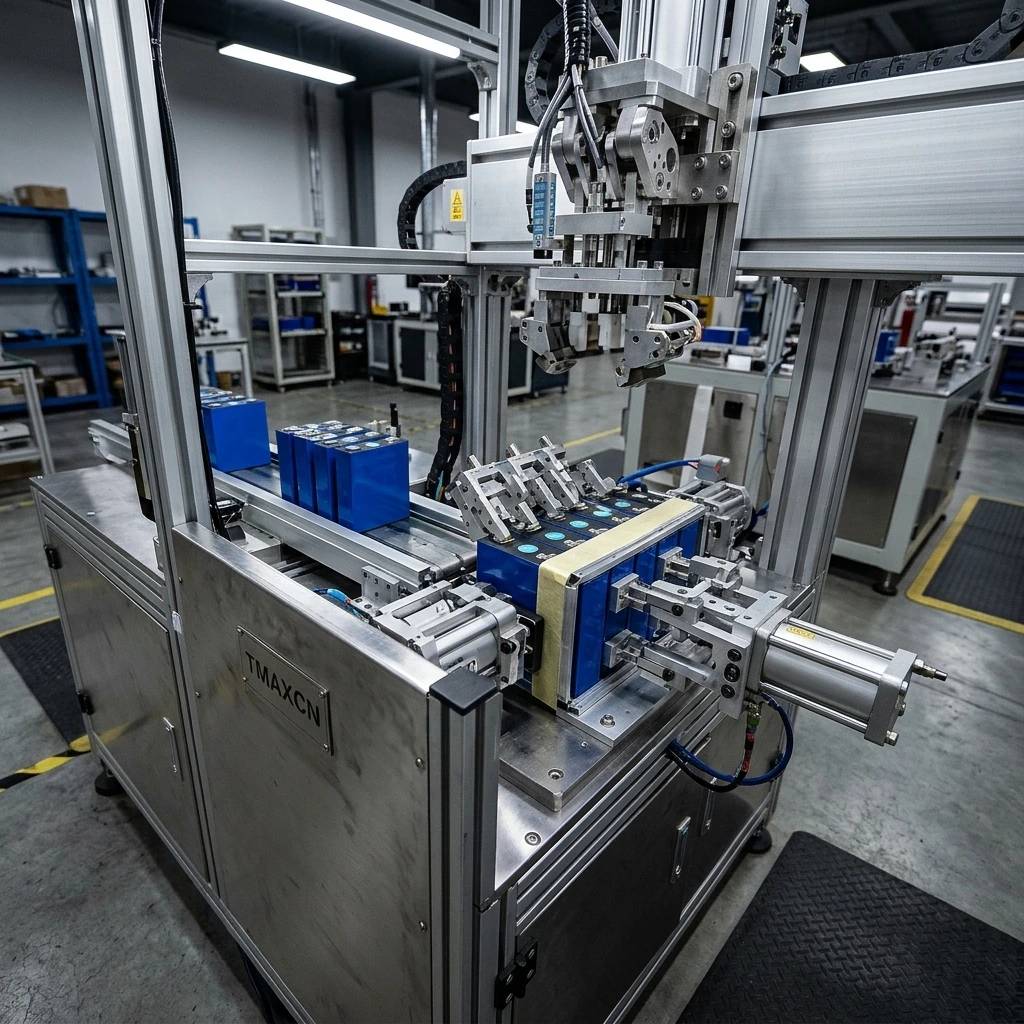
The mechanical structure relies heavily on stable compression tooling to maintain uniform face pressure across the block. Once clamped, laser cleaning systems strip oxidation layers from prismatic terminal poles. Engineers then direct the modules toward precision joining. Integrating advanced prismatic battery pack assembly equipment ensures that aluminum busbars sit flush against terminals prior to high-power discharge.
Welding Accuracy and In-Line Quality Control
Busbar joining stands as the most critical operation for pack structural integrity and low internal resistance. High-frequency fiber laser welders execute precise seam patterns across the negative and positive posts without generating excessive thermal stress into internal jelly rolls. Vision inspection checks every weld nugget for pinholes, burn-through, or spatial offset.
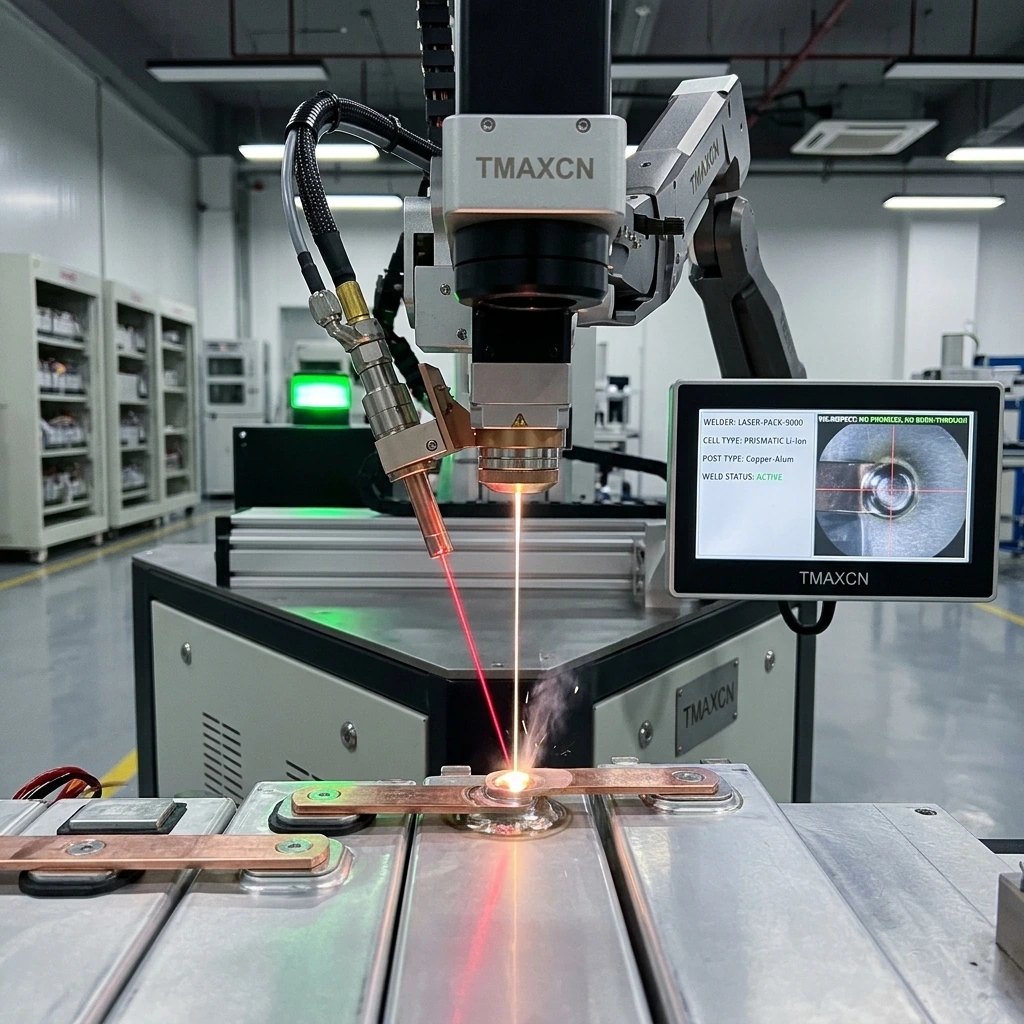
Following the busbar connection, operators route wire harnesses and fasten the BMS hardware. Reliable battery pack assembly line architecture features dedicated calibration checkpoints at this stage. Technicians run initial communication protocols to confirm temperature sensor inputs, voltage taps, and overall balance circuitry before encasing modules into heavy protective trays.
End-of-Line Validation and Delivery Timelines
Every pack undergoes severe electrical verification before crating. Comprehensive testers verify insulation resistance, ground continuity, and high-voltage withstand safety under loaded conditions. Charge and discharge cabinets then cycle the pack through full operational profiles, logging capacity degradation and thermal curves into the factory execution database.
Procurement teams must align hardware orders with clear facility schedules. Sourcing a complete turnkey battery pack solution simplifies commissioning, shipping directly from specialized manufacturing hubs like Xiamen under full CE compliance. Standard semi-automatic configurations typically clear FAT (Factory Acceptance Test) within 45 to 60 days, giving engineers predictable installation windows.
FAQ
Can this setup adapt to changing prismatic cell heights?
The tooling fixtures utilize adjustable guide rails and interchangeable pneumatic clamps. Reconfiguring the line for different cell heights takes under two hours, making our lithium battery pack equipment practical for mixed batch runs.
What is the typical lead time for overseas shipping?
Standard semi-automatic lines require four to six weeks for assembly and testing before export dispatch from Xiamen. Every machine leaves the facility with full CE certification and verified wiring schematics.
 +86 13174506016
 David@tmaxcn.com


