 English▼



Site Blog
contact us
- If you have questions, please contact us, all questions will be answered
- Email : David@tmaxcn.com
- Email : Davidtmaxcn@gmail.com
- Add : No. 39, Xinchang Road, Xinyang, Haicang Dist., Xiamen, Fujian, China (Mainland)
hot products
Blog
Car Battery Production - Process Flow & Turnkey Equipment Guide
Scaling electric vehicle battery manufacturing demands tight process control, predictable yield rates, and reliable automation. Production engineers often struggle to balance high throughput with cell consistency across sorting, interconnect welding, and final pack verification. Small deviations during module stacking or busbar joining cause expensive scrap rates and downstream safety hazards. This engineering overview breaks down each core workstation, explains key machinery integration points, and shows how modular layout design reduces deployment risk during facility commissioning.
Core Stages in Battery Pack Assembly
Modern car battery production converts loose incoming cells into structurally rigid, high-voltage vehicle packs. The operation starts with testing each incoming unit to verify internal resistance and open circuit voltage. Cells that pass testing are automatically grouped to ensure identical electrochemical performance across the entire string.
Mechanically, the grouped cells move to insulation wrapping and structural framing. Automated carriers press the block into precise tolerances before laser processing. Consistent clamping force during this phase keeps prismatic cells stable under thermal expansion.
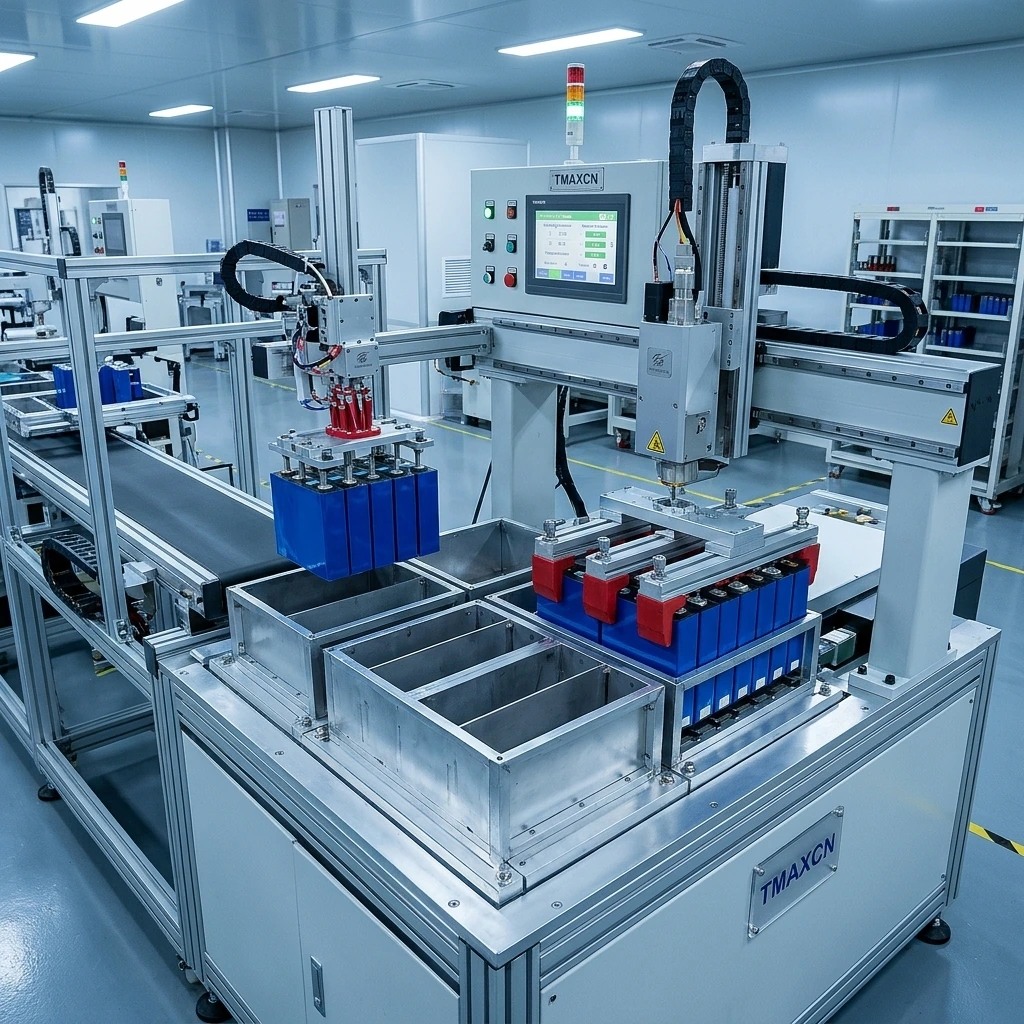
Once stacked, modules receive terminal cleaning and busbar placement. Modern facilities rely on a dedicated to handle cell transfer without scratching exterior films or stressing terminal posts.
Precision Joining and Quality Verification
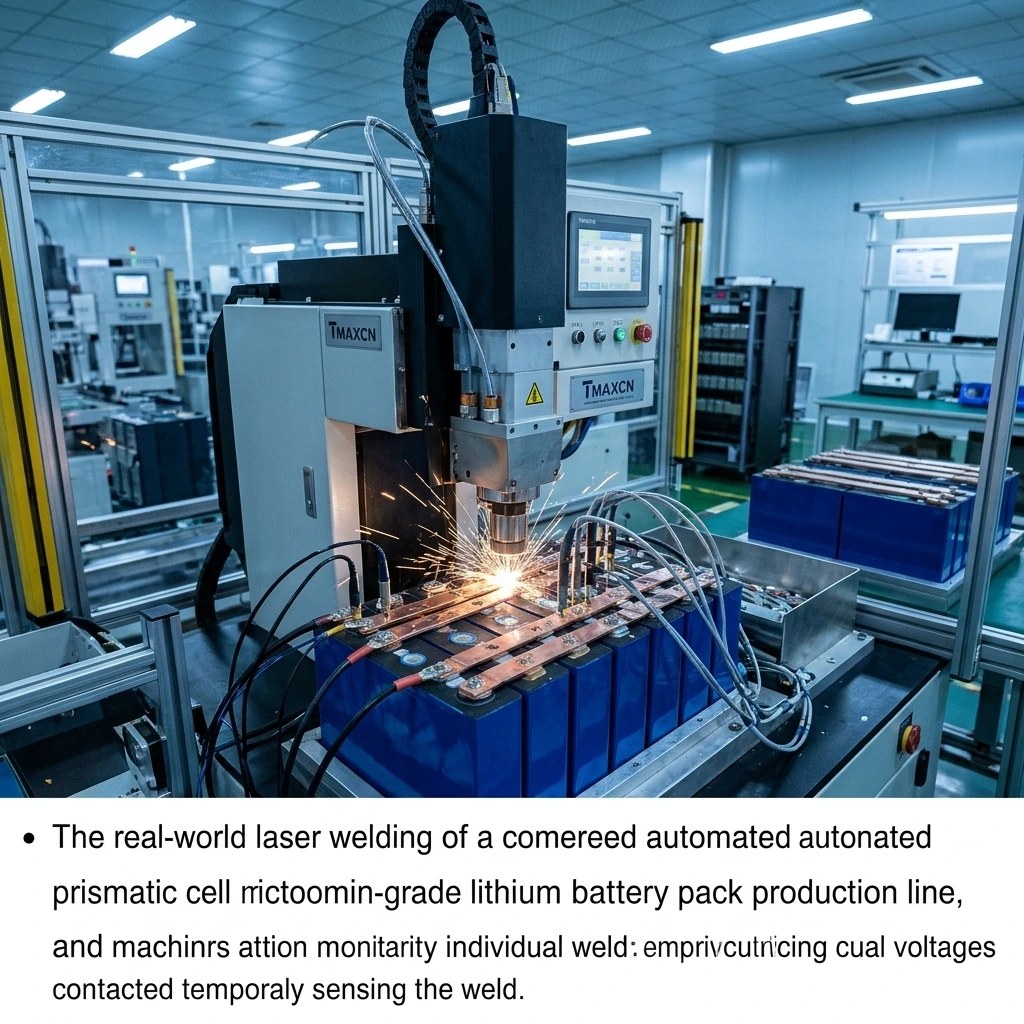
Interconnect joining represents the most critical station on the factory floor. Copper and aluminum busbars require high-speed welding with monitored energy input to prevent heat damage to internal cell layers. Optical recognition cameras scan every terminal location before the beam triggers, compensating for positional tolerances in real time.
After busbar joining, wire harnesses and management boards are attached to monitor individual cell voltages. Reliable verifies communication protocols, temperature sensors, and contactor functions before sealing the enclosure.
Testing continues beyond electrical interconnects. The assembled enclosure undergoes helium or pressure decay leak tests to guarantee environmental sealing against moisture ingress. Completed units then complete comprehensive charge and discharge aging cycles to validate rated capacity under load.
Selecting Scal able Machinery for New Facilities
Configuring a new manufacturing workshop requires balancing capital expenditure with future expansion capacity. Semi-automated configurations offer high flexibility for emerging vehicle programs, allowing operators to oversee pack integration while robots handle sorting, welding, and high-voltage testing.
Choosing an integrated eliminates integration mismatches between sorting tables, laser welders, and end-of-line testers. Standardized communication interfaces streamline line monitoring across every assembly bay.
Plant managers should also account for tooling changeover time. As automotive module architectures evolve, adjustable fixtures prevent prolonged line stoppages and reduce retooling expense across different prismatic cell sizes.
FAQ
How long does deployment take for a complete turnkey battery pack solution?
Standard machinery builds typically require 60 to 90 days from engineering sign-off to factory acceptance testing. Equipment ships with CE documentation directly from Xiamen facilities, allowing engineering teams to complete on-site installation and calibration within two to three weeks.
Can custom lithium battery pack equipment integrate with existing manufacturing plants?
Yes, modular assembly machinery easily interfaces with existing enterprise MES networks and local PLC architectures. Conveyors, safety interlocks, and sensor buses use standardized fieldbus protocols to maintain smooth data flow and traceability across your facility.
 +86 13174506016
 David@tmaxcn.com


