 English▼



products categories
- Battery Production Equipment Line
- Battery Lab Pilot Equipment Line
- Lithium Battery Pack Assembly Line
- Solid State Battery Assembly Line
- Sodium Ion Battery Production Line
- Supercapacitor Assembly Line
- Lithium Ion Battery Recycling Plant
- Dry Electrode Preparation Solution
- Perovskite Based Solar Cell Lab Line
- Electrode Preparation
- Li ion Battery Materials
- Metal Foam
- Cathode Active Materials
- Anode Active Materials
- Customized Battery Electrode
- Coin Cell Parts
- Lithium Chip
- Cylindrical Cell Parts
- Battery Current Collectors
- Battery Conductive Materials
- Electrolyte
- Metal Mesh
- Battery Binder
- Separator and Tape
- Aluminum Laminate Film
- Nickel Strip
- Battery Tabs
- Graphene Materials
- Nickel Felt
- Titanium Fiber Felt
- Battery Pack Machine & Compoments
- Battery Pack Compoments
- Turnkey Solutions Battery Pack Assembly Line
- Cell Sorter
- Battery Pack Spot Welder
- Laser Welder
- Battery Charging Discharging Tester
- Battery Pack Aging Machine
- Battery Pack Comprehensive Tester
- Battery Pack Compression Machine
- CCD Visual Inspector
- Battery Pape Sticking Machine
- BMS Testing Machine
- Al Wire Bonding Machine
- Lithium Battery Machine
- Battery Tester & Analyzer
- Battery Safety Tester
- Material Characterization Tester
- Rolling Press Machine
- Spot Welding Machine
- Vacuum Mixer Machine
- Crimping/Disassembling Machine
- Vacuum Sealing Machine
- Electrolyte Filling
- Stacking/Winding Machine
- Electrode Cutter/Slitter
- Pouch Forming Machine
- NMP Solvent Treatment System
- Lithium Battery Production Plant
- Vacuum Glove Box
- Furnaces
- Hydraulic Press Machine
- Coater
- Ball Mill
- Laboratory Machine
- Planetary Centrifugal Mixer
- Vacuum Oven
- Temperature Humidity Test Chamber
- Hardness Tester
- Spray Dryer
- Incubator
- Rotary Evaporators
- Viscometer
- Three Roller Mill
- Surface Area Analyzer
- Laboratory Crusher
- UV Curing Machine
- Ultra-Low Freezers
- Water Chiller
- Laser Cleaning Machine
- Cutting Machine
- Battery
- Other Lab Equipment
contact us
- If you have questions, please contact us, all questions will be answered
- WhatsApp : +86 18659217588
- Email : David@tmaxcn.com
- Email : Davidtmaxcn@gmail.com
- Add : No. 39, Xinchang Road, Xinyang, Haicang Dist., Xiamen, Fujian, China (Mainland)
-
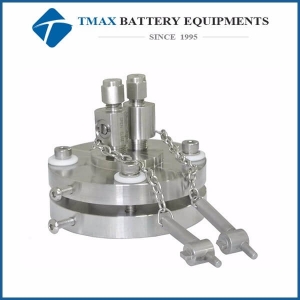 Steel Split Test Cell for Lithium Air Battery Research
Steel Split Test Cell for Lithium Air Battery Research EQ-STC-LI-AIR 1. The EQ-STC-LI-AIR is Split Test Cell for Lithium Air Battery Research. 2. You can control air flow pressure and test various anode and cathode material at easy.
-
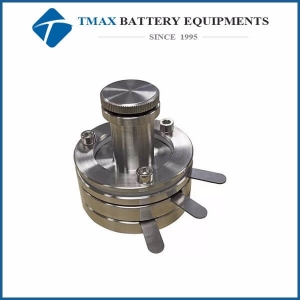 15 mm Diameter Three-Electrode Split Test Cell for R&D Coin Cell
15 mm Diameter Three-Electrode Split Test Cell for R&D Coin Cell 1. The EQ-3ESTC split-able test cell is designed for R&D of rechargeable battery materials by testing three electrodes. 2. It is designed to test various electrodes easily and quickly by providing the user a structure to simulate assembled coin cells without the need to crimp actual coin cell cases. 3. Two sides of the test cell connect to both electrode (the anode and cathode), with the middle being connected to the reference electrode which can be used for monitoring voltage variations of the two electrodes. 4. This test cell can accept 15 mm diameter electrodes and 24mm separators.
-
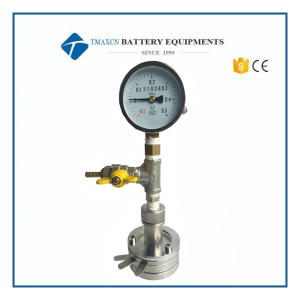 Coin Cell Three-Electrode Split Test Cell with Pressure Gauge
Coin Cell Three-Electrode Split Test Cell with Pressure Gauge TMAX-Three-Electrode is a three-electrode split cell to test anode/cathode with reference electrode in between. It has a mechanical pressure gauge to monitor the air pressure inside chemical reaction chamber and a 1/8'' barb inlet/outlet with needle valve for gas easy in/out. Specifications Model TMAX-Three-Electrode Features 1) Full stainless steel structure ( SS304) 2) Silicon O-ring in between the three plates to ensure good sealing and work up to 250 °C 3) Spring load on top to accept various thickness electrode 4) Easy to separate cell after test 5) Small enough to be put in and out from glove box 6) Mechanical Pressure Gauge: 1/4NPS Fitting (call for price and delivery time if need digital pressure gauge) 7) Niddle valve with 1/4" pipe adaptor Specifications Diameter insert:24 mm Pressure Range: -0.1Mpa-0.5Mpa (0 Mpa as atmosphere)
-
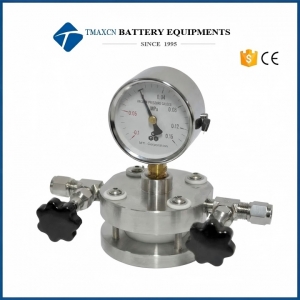 Split Test Cell for Lithium Air Battery Research
Split Test Cell for Lithium Air Battery Research The EQ-STC-LI-AIR is a Split Test Cell for Lithium-Air Battery Research. Specifications Structure · SS304 steel Structure with internal Silver-Clad surface treatment ensures high electrical conductivity and good corrosion protection · Two electrodes design · Electrolyte corrosive-proof PEEK Guide Sleeve and Sealing O-rings · The compact design fits in any benchtop glove boxes Cell Thickness · 1~3mm (cathode + separator + anode) Bottom Recess Area · 20 mm Diam. Max. Working Temperature · 200°C (The default PEEK sleeve works well in this temperature range) Pressure Gauge · Mechanical pressure gauge with a display range from -0.1~0.15Mpa Valves & Fittings · Two Stainless Steel needle valves with 1/4" O.D Tube Fittings
-
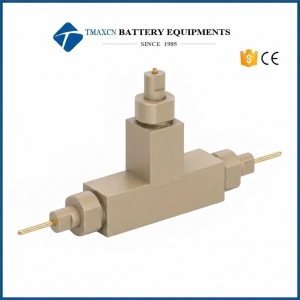 Peek Swagelok Cell Three -Electrode for Battery
Peek Swagelok Cell Three -Electrode for Battery SLC-P is a Swagelok cell designed for high-throughput R&D battery material testing with quick assembling and disassembling. It can be used for both liquid and solid-state batteries Specifications · The working electrode, separator (or not), counter electrode, and reference electrode were assembled into the Swagelok cell by tightening the screw knob. · The cell body is made of PEEK. · The maximum acceptable electrode size is 16mm. The glass carbon with Φ3 size (active area) is used to connect with the anode and cathode. · Two Glassy Carbon Electrodes and a reference electrode are included in the package. · The Ag/AgCl reference electrode is included for fundamental electrochemistry study. If customer is using it for battery research, then a reference electrode (O.D. 6 mm) with glassy carbon core to support the Li/Na metal should be additionally purchased. (This change is made from Feb. 20, 2025). The electrolyte is injected into the cell through the reference electrode port.
 +86 13174506016
 David@tmaxcn.com

